Storm Damage Roofing In Lewistown, PA: What To Do After Wind, Hail, Or Heavy Rain
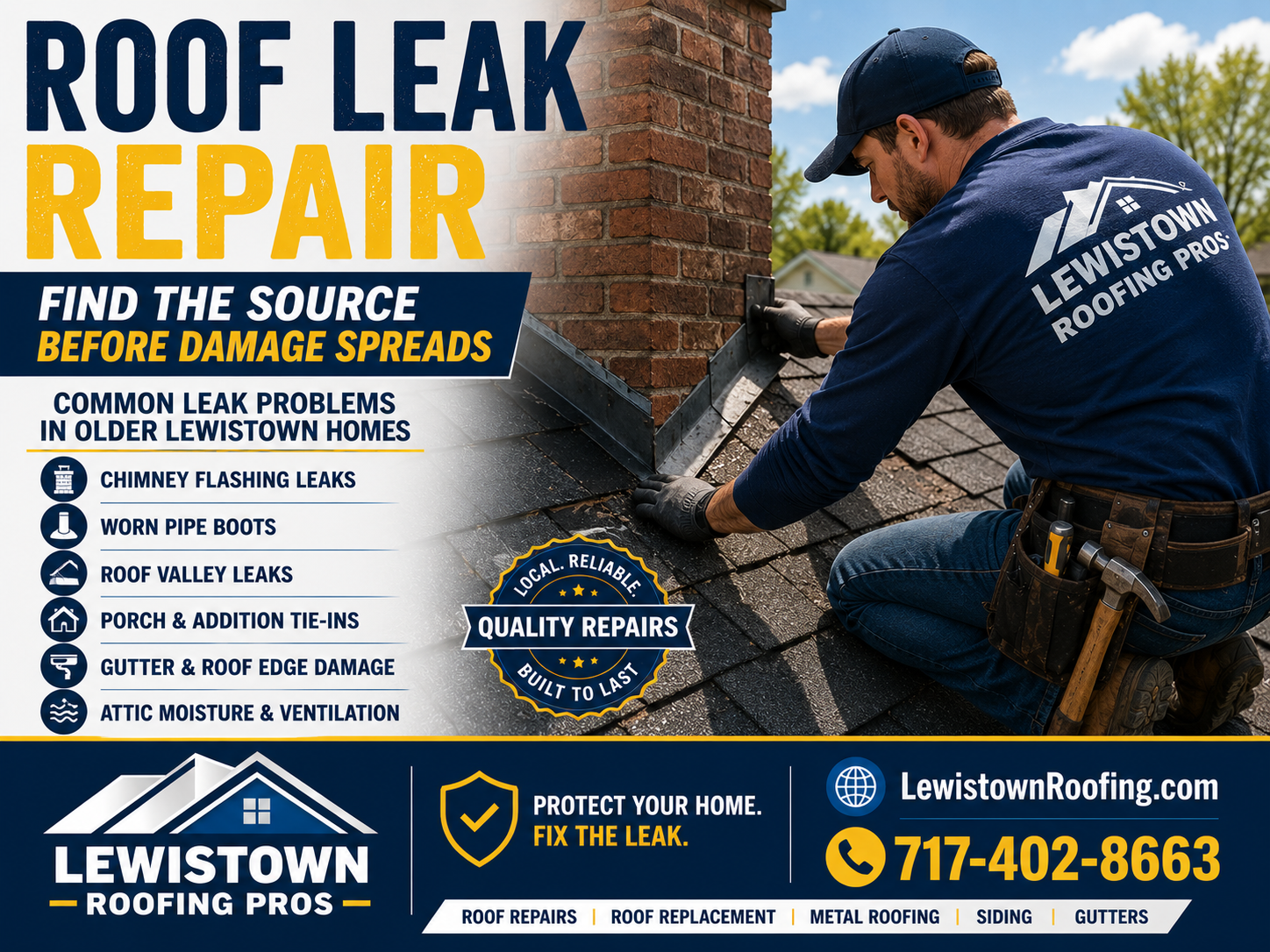
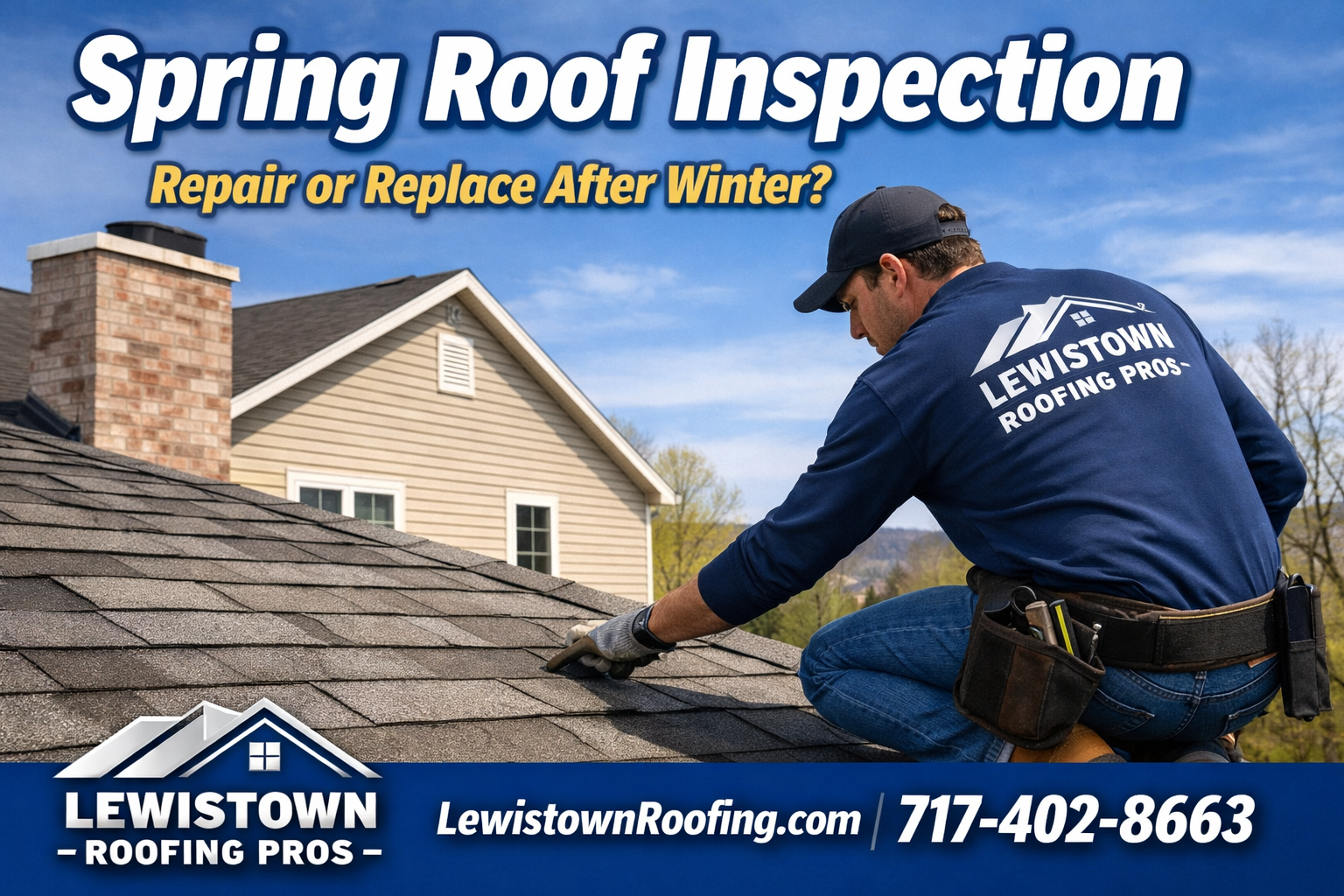
Storms can damage a roof quickly. Wind, hail, heavy rain, falling branches, and flying debris can all create problems that may not be obvious right away. A roof can look fine from the driveway but still have lifted shingles, cracked flashing, damaged vents, or small openings where water can enter.
That is why homeowners in Lewistown and surrounding Mifflin County areas should take roof damage seriously after a strong storm.
You do not need to climb on the roof yourself. In fact, you should not. But you should know what warning signs to look for from the ground and when to call a roofing contractor for an inspection.

After wind, hail, or heavy rain, check your roof from the ground for missing shingles, lifted shingles, debris impact, damaged gutters, loose flashing, ceiling stains, and leaks. If you see visible damage or notice water inside, call a roofing contractor as soon as possible. Storm damage can get worse quickly if water reaches the decking, attic, insulation, or interior walls.
Why Storm Damage Is Not Always Obvious
Many homeowners expect storm damage to be dramatic. Sometimes it is. A branch may hit the roof, shingles may blow off, or water may start leaking immediately.
But a lot of storm damage is more subtle.
Wind can lift shingles without removing them completely. Hail can bruise or weaken shingles. Heavy rain can expose flashing problems around vents, chimneys, and valleys. Gutters can pull loose or overflow. Roof vents can crack. A small opening can let water enter slowly over time.
That is why “I don't see anything from the ground” does not always mean the roof is fine.
What To Do First After A Storm
After a storm, start with safety.
Do not climb onto the roof. Do not touch downed wires. Do not walk around under loose limbs or unstable debris. If there is active leaking inside, move belongings away from the area and use a bucket or container to catch water if it is safe to do so.
Then, from the ground, look for:
- missing shingles
- shingles hanging loose
- debris on the roof
- damaged gutters
- loose downspouts
- branches touching the roof
- bent or damaged roof vents
- siding damage
- water stains inside the home
If you see roof damage or suspect a leak, call a roofing contractor for an inspection.
Signs Of Wind Damage On A Roof
Wind damage can be tricky because the roof may not look destroyed. The most common issue is lifted shingles. When shingles lift, the seal can break. Once the seal is broken, the roof is more vulnerable to future wind and water.
Signs of wind damage may include:
- missing shingles
- lifted shingle edges
- uneven-looking roof sections
- loose ridge caps
- shingles folded back
- exposed underlayment
- debris damage
- new leaks after windy rain
Even if only a few shingles are affected, the roof should be repaired before more water gets in.
Signs Of Hail Damage
Hail damage is not always easy to identify from the ground. It may appear as dents, bruises, granule loss, or impact marks on shingles and roof accessories.
Possible signs of hail damage include:
- dents on gutters or downspouts
- marks on metal vents
- granules collecting in gutters
- round impact marks on shingles
- cracked or weakened shingles
- damage to siding, screens, or outdoor items
If hail was large enough to damage cars, siding, gutters, or outdoor furniture, it may have damaged the roof too. A roofing inspection can help determine whether the roof was affected.
Heavy Rain Can Expose Existing Weak Spots
Heavy rain does not always create roof damage by itself. Many times, it reveals problems that were already there.
A strong rain can expose bad flashing, worn pipe boots, roof valley issues, poor drainage, gutter overflow, weak roof edges, old shingle damage, or previous repair failures.
If your roof only leaks during heavy rain, that still matters. It usually means water is getting in under certain conditions. The problem may get worse over time if it is not corrected.
Check The Attic After A Storm
If you can safely access your attic, it may show signs of roof damage before the living space does.
Look for damp insulation, dark stains on wood, water trails, daylight coming through roof boards, musty smells, or wet areas near vents, chimneys, or valleys.
Do not ignore attic moisture. A small roof leak can damage insulation, wood, drywall, and other parts of the home if it continues.
Should You Call Insurance First Or A Roofer First?
This depends on the situation.
If there is major damage, active leaking, or a tree on the roof, contact your insurance company and a roofing contractor quickly. If the damage is less obvious, many homeowners call a roofing contractor first to inspect the roof and document what they see.
A contractor can help identify whether the issue looks storm-related, repairable, or part of an older roofing problem.
The key is documentation. Take photos from the ground if you can do so safely. Save any photos of hail, fallen limbs, interior leaks, ceiling stains, or visible damage.
Temporary Protection May Be Needed
If storm damage leaves an opening in the roof, temporary protection may be needed to prevent more water from entering.
This may include tarping or emergency repair work until a permanent repair or replacement can be completed.
Do not wait if water is actively entering the home. The longer water gets in, the more damage it can cause.
Repair Or Replacement After Storm Damage
Not every storm-damaged roof needs replacement. Some roofs only need small repairs.
A repair may be enough if only a few shingles are damaged, flashing can be corrected, the leak source is isolated, the roof is otherwise in good condition, or damage is limited to one area.
Replacement may make more sense if damage is widespread, the roof is older, shingles are failing across multiple areas, hail damage is significant, leaks are happening in more than one area, or the roof has already needed repeated repairs.
A trustworthy roofing contractor should explain the difference clearly. The goal is to recommend the right solution, not automatically push the largest project.
Why Fast Action Matters
Storm damage can grow quickly. One loose shingle can become several missing shingles during the next wind event. A small leak can spread into insulation, drywall, and framing. A damaged gutter can create drainage issues along the roof edge and foundation.
Fast inspection and repair can help prevent interior water damage, attic moisture, insulation damage, mold concerns, decking damage, higher repair costs, and more serious roof failure.
If you suspect storm damage, it is better to check early than wait for the next leak.
Storm Damage Roofing In Lewistown, PA
Lewistown Roofing Pros helps homeowners and property owners in Lewistown, Burnham, Reedsville, Milroy, McVeytown, Yeagertown, Belleville, and surrounding Mifflin County areas with storm damage roof inspections, roof repairs, roof replacement, metal roofing, rubber roofing, siding, and gutters.
If your roof was damaged by wind, hail, heavy rain, or falling debris, do not wait for the problem to get worse.
Call
717-402-8663 or visit
LewistownRoofing.com to request an estimate.