Metal Roofing Vs. Asphalt Shingles In Central PA: Which Is Better For Your Home?
If you are planning a roof replacement in Lewistown or anywhere in Central Pennsylvania, one of the biggest decisions is whether to choose metal roofing or asphalt shingles.
Both can be good options. Both can protect your home. Both can look sharp when installed correctly. But they are not the same when it comes to cost, appearance, maintenance, durability, noise, and long-term value.
For many homeowners, asphalt shingles are the familiar choice. They are common, affordable, and available in many styles and colors. Metal roofing, on the other hand, has become more popular because of its long service life, clean appearance, and ability to handle tough weather.
The right answer depends on your home, budget, roof design, and long-term plans.
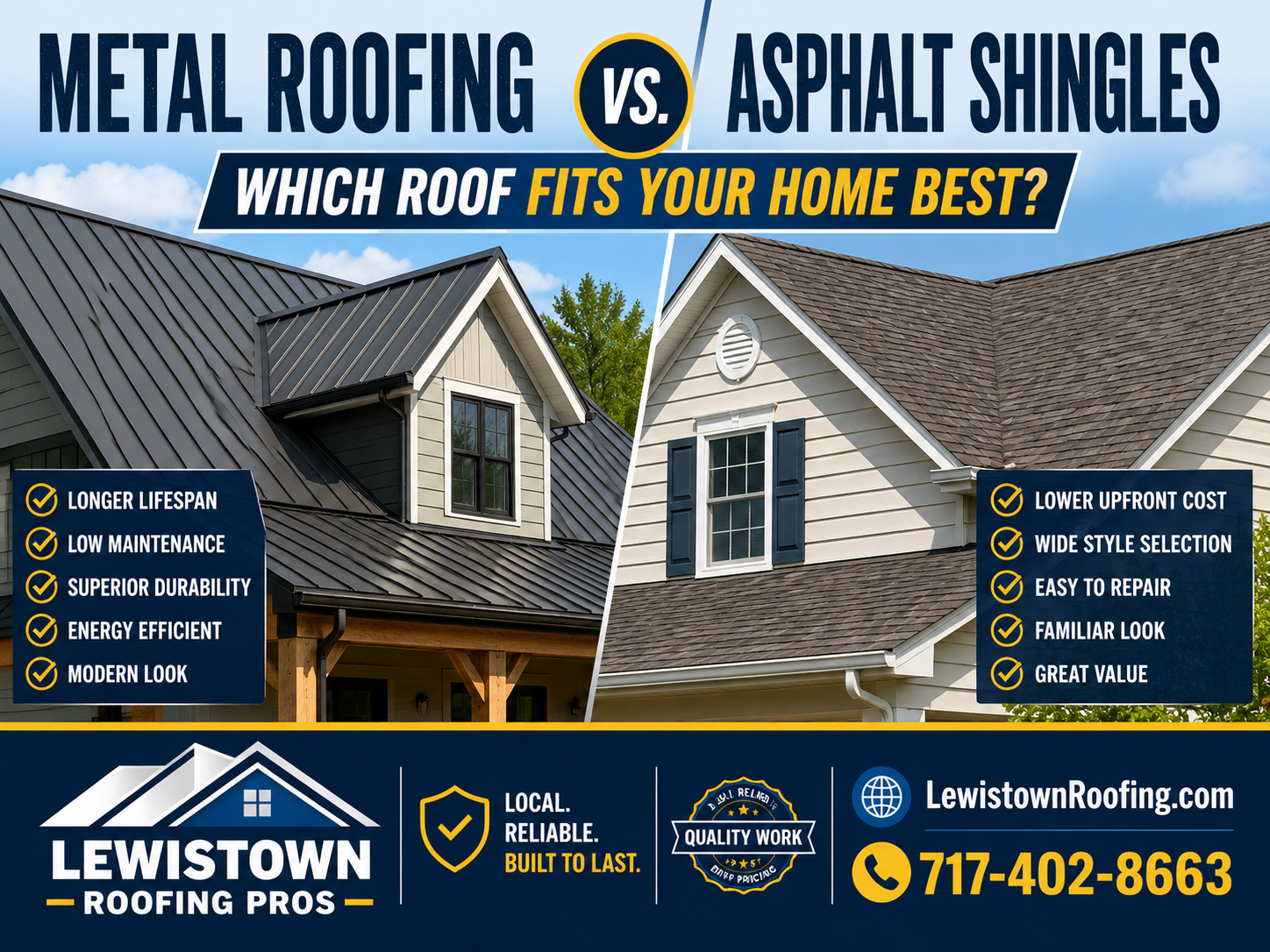
Asphalt shingles are usually the more budget-friendly roofing option up front, while metal roofing usually costs more initially but may offer longer life, strong weather resistance, and lower long-term maintenance. If you want a lower initial cost, shingles may make sense. If you want a longer-term roofing investment and like the look of metal, metal roofing may be the better fit.
Why This Decision Matters
A roof is not something most homeowners want to replace often. When you are spending money on a roof replacement, the goal is not just to get through the next year. The goal is to protect the home, reduce future problems, and make a smart investment.
In Central PA, roofs have to deal with a mix of conditions:
- hot summers
- cold winters
- heavy rain
- wind
- snow and ice
- tree debris
- changing temperatures
That means your roofing material needs to be installed properly and matched to the home. A good product installed poorly can still fail. A good roofing contractor should help you compare options honestly instead of pushing one material for every house.
Asphalt Shingles: The Familiar Choice
Asphalt shingles are the most common residential roofing material in many areas, including Central Pennsylvania. Homeowners choose them because they are practical, affordable, and widely available.
Asphalt shingles can work well for:
- single-family homes
- rental properties
- starter homes
- traditional neighborhoods
- homeowners watching upfront cost
- roofs with standard slopes and layouts
One of the biggest advantages of asphalt shingles is that most homeowners already understand the look. They blend well with many types of homes, from older Lewistown houses to newer homes in nearby communities.
Benefits Of Asphalt Shingles
The first benefit is cost. Asphalt shingles are typically less expensive up front than metal roofing. That makes them attractive for homeowners who need a new roof but want to keep the project within a tighter budget.
They also offer a lot of color and style options. A homeowner can choose a darker roof, lighter roof, dimensional shingle, or a more traditional look depending on the house.
Another advantage is repairability. If a few shingles are damaged by wind or debris, a roofing contractor may be able to repair a small section without replacing the entire roof.
Asphalt shingles are also familiar to buyers. If you plan to sell the home in the near future, a clean, properly installed shingle roof is easy for buyers to understand.
Possible Downsides Of Asphalt Shingles
The biggest downside is that shingles may not last as long as metal roofing. They can also be affected by wind, granule loss, algae staining, heat, and repeated weather exposure.
Common shingle issues include:
- missing shingles
- lifted shingles
- curling edges
- granule loss
- cracking
- staining
- leaks around flashing or roof penetrations
Shingles can still be a strong choice, but they need proper installation, ventilation, flashing, and maintenance. A shingle roof should not be treated as “set it and forget it.”
Metal Roofing: The Long-Term Option
Metal roofing has become more common on homes, cabins, farmhouses, garages, porches, additions, and commercial buildings throughout Central Pennsylvania.
A metal roof can offer a clean, strong look. It can work especially well for homeowners who want a durable roof and are willing to spend more up front for a longer-term option.
Metal roofing may be a good fit if:
- you plan to stay in the home long-term
- you like the look of metal
- you want strong weather resistance
- you want lower long-term maintenance
- your home design fits the style
- your roof has areas where snow shedding matters
Metal roofing is also popular for porches, additions, garages, and outbuildings, even when the main home has shingles.
Benefits Of Metal Roofing
Metal roofing is known for durability. A properly installed metal roof can handle a lot of weather, including rain, snow, and wind.
It also sheds water well. On the right roof design, metal can help move rain and snow off the roof more efficiently than some other materials.
Metal roofing can also create a sharp, updated appearance. For some homes, it adds curb appeal immediately. Dark metal, charcoal, bronze, and classic colors can all look strong depending on the siding, trim, and home style.
Another benefit is reduced long-term maintenance. While metal roofs still need proper flashing, fasteners, trims, and periodic inspection, they generally do not have the same shingle issues like granule loss or missing tabs.
Possible Downsides Of Metal Roofing
The main downside is upfront cost. Metal roofing usually costs more than asphalt shingles at installation.
Another consideration is style. Not every homeowner likes the look of metal on every house. A metal roof can look excellent on the right home, but it needs to match the design.
Noise is another common concern. Many homeowners ask whether metal roofs are loud during rain. A properly installed metal roof over the right decking and insulation is usually not the loud “barn roof” sound people imagine. But the final sound depends on the structure, installation method, attic, insulation, and roof assembly.
Metal roofing also requires experienced installation. Details matter. Flashing, seams, trim, fasteners, valleys, penetrations, and edges must be handled correctly.
Which Roof Is Better For Central PA Weather?
Both can work in Central Pennsylvania when installed correctly.
Asphalt shingles are a good fit for many homes because they are practical, affordable, and familiar. Metal roofing is a strong fit for homeowners looking for durability, weather resistance, and long-term value.
The more important question is not only “which material is better?” The better question is: Which roofing system is better for your specific home?
A steep roof, low-slope section, porch roof, older home, shaded roof, or complex roofline may affect the recommendation. The condition of your decking, attic ventilation, gutters, flashing, and existing roof also matters.
What About Roof Repairs?
If your current roof only has a small issue, you may not need replacement at all.
A few missing shingles, a small flashing problem, or a limited leak may be repairable. But if your roof has repeated leaks, widespread shingle damage, soft decking, or major wear, replacement may be the smarter move.
This is where a roofing inspection helps. You do not want to replace a roof that only needs repair. But you also do not want to keep patching a roof that is clearly near the end of its useful life.
How To Choose Between Metal And Shingles
Here is a simple way to think about it.
Choose asphalt shingles if you want:
- lower upfront cost
- a familiar residential look
- a practical roof replacement
- easier small-section repairs
- a roof that blends into most neighborhoods
Choose metal roofing if you want:
- a longer-term roofing investment
- a clean, durable appearance
- strong weather performance
- lower long-term maintenance
- a roof style that stands out
Neither option is automatically right for every homeowner. The best choice depends on your home, budget, and goals.
Get A Roofing Estimate In Lewistown, PA
If you are comparing metal roofing and asphalt shingles, Lewistown Roofing Pros can help you look at the options clearly.
We help homeowners in Lewistown, Burnham, Reedsville, Milroy, McVeytown, Yeagertown, Belleville, and surrounding Mifflin County areas with roof replacement, roof repairs, metal roofing, rubber roofing, siding, and gutters.
Call 717-402-8663 or visit LewistownRoofing.com to request an estimate.
FAQs
Is Metal Roofing Better Than Asphalt Shingles?
Metal roofing may be better for homeowners who want a longer-term roofing system and are comfortable with a higher upfront cost. Asphalt shingles may be better for homeowners who want a practical, familiar, lower-cost roof replacement.
Is A Metal Roof Too Loud When It Rains?
A properly installed metal roof over the right decking and insulation is usually not as loud as many homeowners expect. Noise depends on the home’s roof assembly, attic, and insulation.
Are Asphalt Shingles Still A Good Option?
Yes. Asphalt shingles remain a good option for many homes because they are affordable, widely available, and available in many styles and colors.
Which Roof Is Better For Homes In Lewistown, PA?
Both metal roofing and asphalt shingles can work well in Lewistown when installed properly. The best choice depends on your home, budget, roof design, and long-term plans.