Spring Roof Inspection in Lewistown, PA: Signs Your Roof Needs Repair Or Replacement After Winter
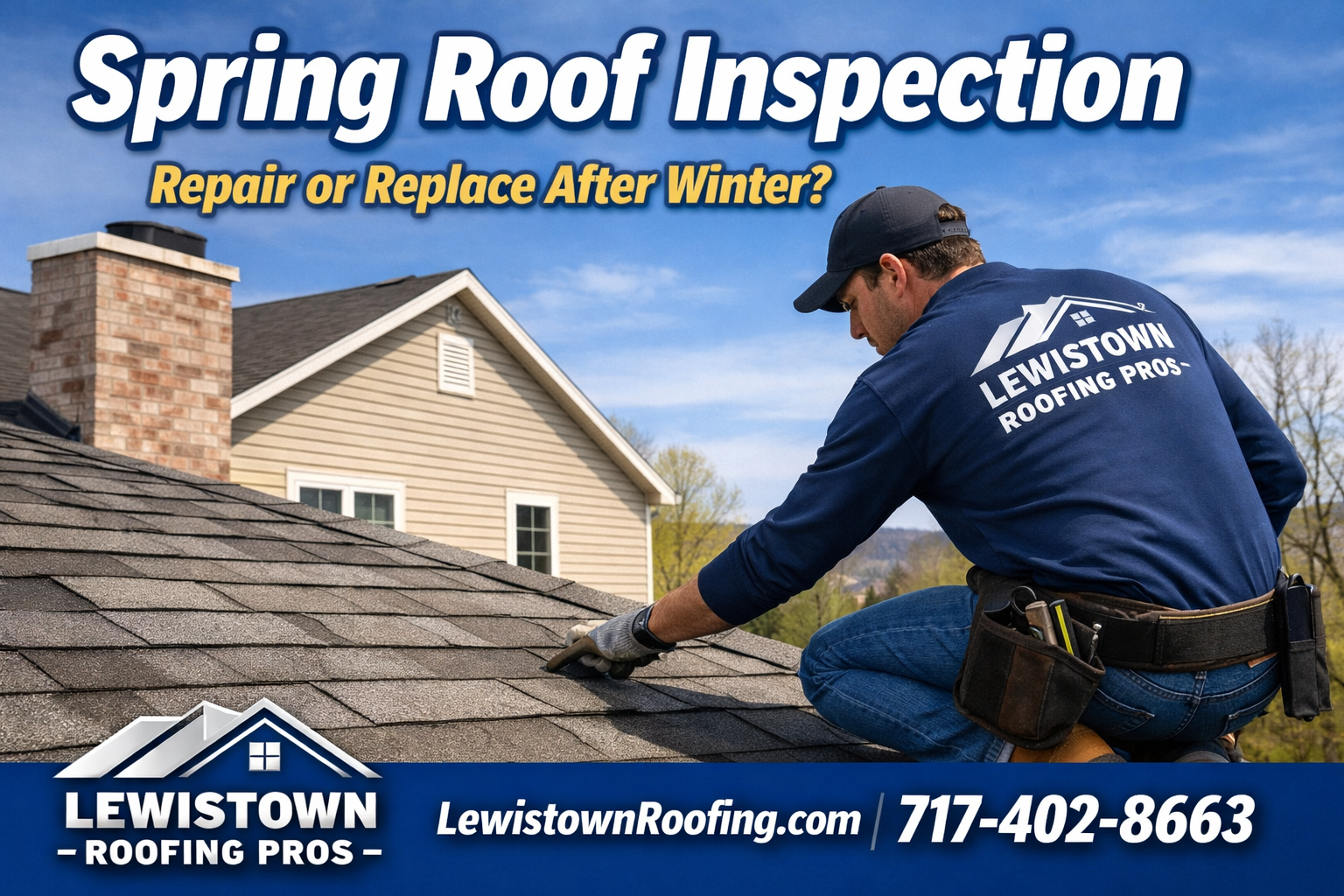
Winter is hard on roofs in Central Pennsylvania. Snow, ice, wind, temperature swings, and moisture can all expose weak spots that were easy to ignore in the fall. By early spring, a roof that looked “fine” a few months ago may suddenly show missing shingles, leaks, flashing issues, gutter problems, or signs of trapped moisture in the attic.
Penn State housing resources specifically highlight attic ventilation, moisture relief, and ice-dam prevention as important to roof durability, and roofing guidance for homeowners points to ceiling stains, attic leaks, peeling paint, and damaged shingles as warning signs worth checking. (Pennsylvania Housing Research Center)
Quick answer:
If your roof has a small, isolated issue after winter, such as a few damaged shingles, minor flashing damage, or one repairable leak source, a professional repair may be enough. If the roof has widespread shingle damage, repeated leaks, sagging areas, major storm damage, or is simply at the point where repairs are becoming frequent, replacement is usually the smarter long-term move. Roofing manufacturers and industry guidance both make the same basic point: limited damage can often be repaired, but broader or more extensive damage usually means it is time to think seriously about replacement. (GAF)
Why spring is the right time to inspect your roof
A lot can happen to a roof during a Pennsylvania winter. Ice buildup, freeze-thaw cycles, wind-driven rain, and snow loads can all stress roofing materials. Poor attic ventilation and moisture management can also contribute to condensation, deterioration, and ice-dam-related problems over time. That makes spring one of the best times of year to have your roof checked before small winter issues turn into larger repair bills. (Pennsylvania Housing Research Center)
For homeowners in Lewistown, Burnham, Reedsville, Milroy, McVeytown, and the surrounding Mifflin County area, spring inspections are especially useful because they give you a chance to catch damage before the heavier storm season ramps up. The National Weather Service’s State College office notes that severe thunderstorms can bring damaging winds and hail, and Central PA event summaries include wind and hail impacts in and around the region. (National Weather Service)
Signs a roof repair may be enough
Not every roofing problem means you need a full replacement. In many cases, a targeted repair is the right move.
A repair may be enough if:
- the issue is limited to a small section of the roof
- only a few shingles are cracked, missing, or lifted
- flashing around a vent, chimney, or valley has loosened
- the leak source is clearly identified and isolated
- the rest of the roof is still in solid condition
- the roof is not near the end of its useful life
For example, if winter winds lifted a small section of shingles or a boot around a vent has failed, a professional repair can often solve the problem without replacing the whole roof. That is why a hands-on inspection matters. The goal is not to sell a bigger project than you need. The goal is to figure out whether the problem is local or system-wide.
Signs replacement may be the better investment
Sometimes repairs only delay a larger problem. If the roof has multiple weak areas, patching one spot may not save you money for long.
A replacement becomes more likely when you have:
- repeated leaks in different areas
- widespread shingle wear or granule loss
- sagging roof sections
- visible signs of water intrusion in the attic or ceilings
- storm damage across larger sections
- an older roof with ongoing repair history
Guidance for homeowners consistently points to signs like ceiling stains, attic leaks, peeling paint, and visible roof damage as important warning signals. When damage is more widespread, it is often more practical to replace than keep patching the same roof over and over. (GAF)
What a spring roof inspection should include
A proper spring roof inspection should look at more than just shingles.
A roofing contractor should inspect:
- shingles or roof covering for lifting, cracking, curling, or missing sections
- flashing around chimneys, vents, skylights, and roof transitions
- gutters for granules, debris, and drainage problems
- fascia, soffit, and roof edges
- attic signs of moisture, staining, poor ventilation, or daylight intrusion
- soft spots or structural concerns
- areas that commonly fail first, such as valleys and penetrations
This matters because roof problems do not always show up where the water stain appears inside. Water can travel before it becomes visible. A spring inspection gives you a better chance of finding the real source before the next heavy rain.
Why acting early can save money
The biggest mistake many homeowners make is waiting too long.
A small leak does not usually stay small. Moisture can affect decking, insulation, drywall, paint, and even air quality if mold starts to develop. Penn State housing guidance emphasizes moisture control and ventilation because trapped moisture and winter-related roof issues can reduce durability over time. (Pennsylvania Housing Research Center)
That is why the best time to deal with roof damage is when the signs first appear:
- after winter
- after a wind event
- after hail
- when you notice a stain
- when shingles show visible damage
- before you put the home on the market
Repair or replace? Start with the inspection
If you are not sure whether your roof needs a repair or a full replacement, start with a professional inspection. That gives you a real answer based on the condition of your roof, not guesswork from the ground.
At Lewistown Roofing Pros, we help homeowners and property owners in Lewistown and surrounding Mifflin County areas understand what is really going on with their roof. Sometimes the right answer is a repair. Sometimes replacement makes more sense. Either way, the first step is getting the roof looked at before the problem grows.
Call 717-402-8663 to schedule a spring roof inspection or request a free estimate.
FAQ section
How do I know if my roof needs repair or replacement?
If the damage is isolated and the rest of the roof is in good condition, repair may be enough. If the damage is widespread, leaks keep returning, or the roof is aging badly, replacement is usually the better long-term choice.
What winter roof problems are common in Pennsylvania?
Common problems include missing shingles, flashing damage, leaks, moisture buildup, drainage issues, and damage related to ice and ventilation problems.
Is spring a good time to inspect a roof?
Yes. Spring is one of the best times to inspect a roof because winter weather can expose damage, and catching it early helps you avoid more expensive repairs later.
Can wind or hail cause hidden roof damage?
Yes. Even when damage is not obvious from the ground, wind and hail can loosen shingles, damage flashing, and shorten the life of the roof. (National Weather Service)